From the harvest
Meet the Forgotten Winter Fruits: How to Cook with Quince and Persimmons
Quince and persimmons look intimidating, but they are two of the late season's great treasures. Here is how to tell your Hachiya from your Fuyu and turn a rock-hard quince ruby red.
Orchards Near Me · 24 November 2026
The fruits shoppers walk past
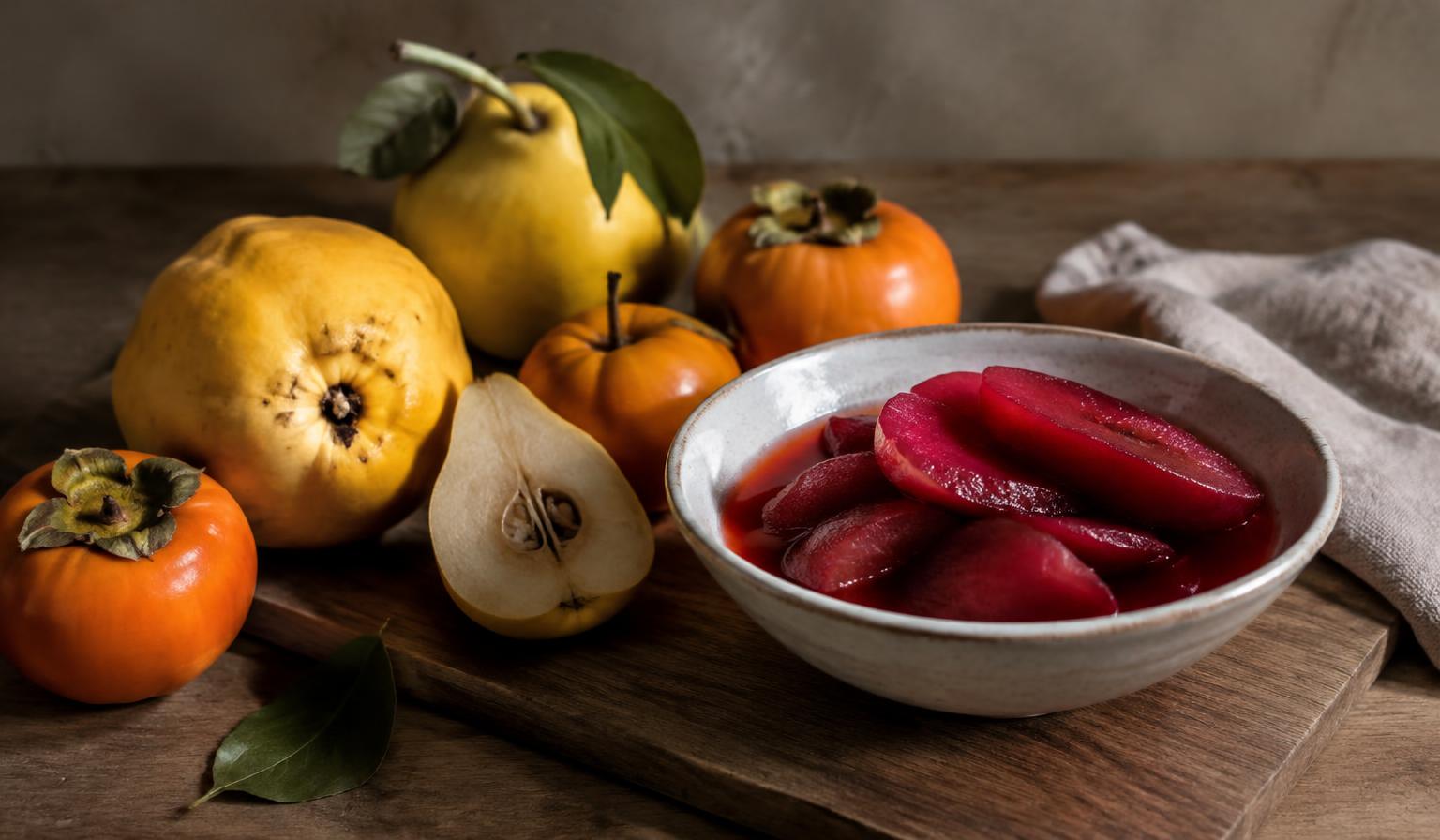
At this time of year, market stalls hold two fruits that most people leave behind: the knobbly, golden quince and the glossy orange persimmon. Both look a little mysterious. Both reward anyone brave enough to take them home.
Quince: from hard and sour to floral and ruby
A raw quince is hard, woolly and astringent. Do not bite it. Its magic happens with gentle heat. Peel, core and slice it, then poach slowly in water with sugar or honey, a strip of lemon peel and perhaps a vanilla pod or cinnamon stick.
Over an hour or more, the pale flesh turns pink, then deep ruby, and the kitchen fills with a scent somewhere between pear, rose and honey. Serve with yoghurt or porridge, bake into tarts, or cook it down into membrillo, the firm Spanish quince paste that is wonderful with cheese.
Persimmons: know your type
This is the crucial bit. Hachiya persimmons are acorn shaped and must be completely jelly soft before eating; an underripe one is so astringent it dries your mouth. Leave them on the counter until they feel like a water balloon, then scoop the sweet flesh with a spoon or use it in puddings and breads.
Fuyu persimmons are squat and flat bottomed, like a tomato. You can eat them while firm, sliced like an apple, in salads with walnuts and soft cheese, or roasted with a drizzle of honey.
Easy ideas to start
Poached quince on Sunday morning porridge. Sliced Fuyu with rocket, pomegranate and goat cheese. Hachiya pulp folded into a spiced quick bread. A cheese board with membrillo and crisp pears.
Buying unusual fruit supports biodiversity
Every time you buy an heirloom or unusual variety, you tell a grower it is worth keeping those trees in the ground. Old orchards hold genetic diversity that matters for the future of our food. Ask at farm shops and markets, and look in our directory for orchards near you that grow more than the usual suspects.
Questions before you go
Can you eat quince raw?
Most quince varieties are too hard and astringent to enjoy raw. Cook them slowly instead.
How do I know a Hachiya persimmon is ripe?
It should feel extremely soft, almost liquid inside the skin, with no firmness at all.
Why does quince turn red?
Long, gentle cooking changes compounds in the fruit, turning the flesh from cream to pink and ruby.
Find places to visit
Season months are approximate, not live opening updates. Check the farm’s official information for today’s hours, picking availability, prices and booking.