Family days outdoors
What to wear for foraging and farm days with kids
From muddy orchards to sunny berry fields, a practical family guide to footwear, layers, waterproofs and the little extras that keep children comfortable outdoors.
Orchards Near Me · 14 October 2026
The quick answer: dress for the ground, not just the forecast
For most family farm visits and gentle foraging walks, start with comfortable closed-toe footwear with good grip, long trousers, a breathable top and a removable warm layer. Add a waterproof jacket when rain is possible, a sunhat when it is bright, and a complete spare outfit for younger children. Clothes should let everyone bend, reach, crouch and walk without pinching or trailing.
Think about the place as well as the weather. A paved farm shop, a muddy pumpkin field, a brambly hedgerow and a coastal walk need different choices. Check the host’s advice before leaving, especially for guided foraging, animal encounters or shore visits. Comfortable everyday clothes are often enough; you do not need to buy a whole outdoor wardrobe for a short outing.
Choose footwear first: boots, wellies or trainers?
Walking boots or sturdy walking shoes are a good choice for uneven orchard paths and longer woodland walks. Look for a sole with grip, a secure fit and enough room to wiggle toes. Try them with the socks your child will actually wear, and break in new shoes before the trip rather than on the day.
Wellington boots are useful for short visits to muddy farms, wet grass and pumpkin patches. They are easy to wipe clean, but can rub or feel tiring on longer walks. Use well-fitting socks and check that the boot stays on when your child walks. For a long foraging route, ask the guide whether walking boots would be more suitable.
Trainers can work on dry, maintained paths if the farm says the surface is suitable. Avoid smooth-soled fashion shoes, open sandals and flip-flops on rough ground or around animals. Waterproof footwear is helpful in wet conditions, but even a waterproof boot can fill from the top if someone steps into a deep puddle. Pack spare socks rather than relying on the label.
Build an outfit in three easy layers
Next to the skin, choose a comfortable top that allows movement. A breathable, quick-drying top is useful on an active or damp day; an ordinary T-shirt may be perfectly adequate for a short, mild-weather visit. Avoid sending children out in their thickest jumper with nothing lighter underneath.
For warmth, add a fleece or another light layer you can take off and carry. Keep it accessible so you can adjust clothing before your child becomes chilled or sweaty. A waterproof outer jacket helps with showers and wind. Check whether it is genuinely waterproof or only described as shower-resistant, and make sure your child can see clearly with the hood up.
Layers are particularly handy when moving between a warm car, an exposed field and a sheltered barn. Remove unnecessary insulation during active walking, then add warmth when you stop for a picnic. Clothing is not a reason to stay out in unsafe heat, cold or storms: shorten or postpone the visit when conditions warrant it.
Long trousers make sense for hedgerows and woodland
Flexible long trousers protect legs from scratches and give more coverage in long grass. Choose a fit that allows crouching for strawberries or stepping over uneven ground. On wet days, lightweight waterproof overtrousers can be useful for children who are likely to kneel or sit in the grass. Heavy jeans are less practical once soaked.
For tick-prone areas, UKHSA advises covering exposed skin and tucking trousers into socks. Light-coloured clothing can make ticks easier to spot. Stick to established paths where possible, use a suitable insect repellent according to its label, and check clothing and skin after the outing. Covering up reduces exposure but does not make a tick check unnecessary.
Brambles and nettles are another reason to cover arms and legs. Gloves can help when an adult or guide has identified an appropriate plant to gather, but they do not make an unknown plant safe to touch or eat. Keep young children away from thorns and unfamiliar plants rather than relying on clothing alone.
What to wear for apple picking and orchard visits
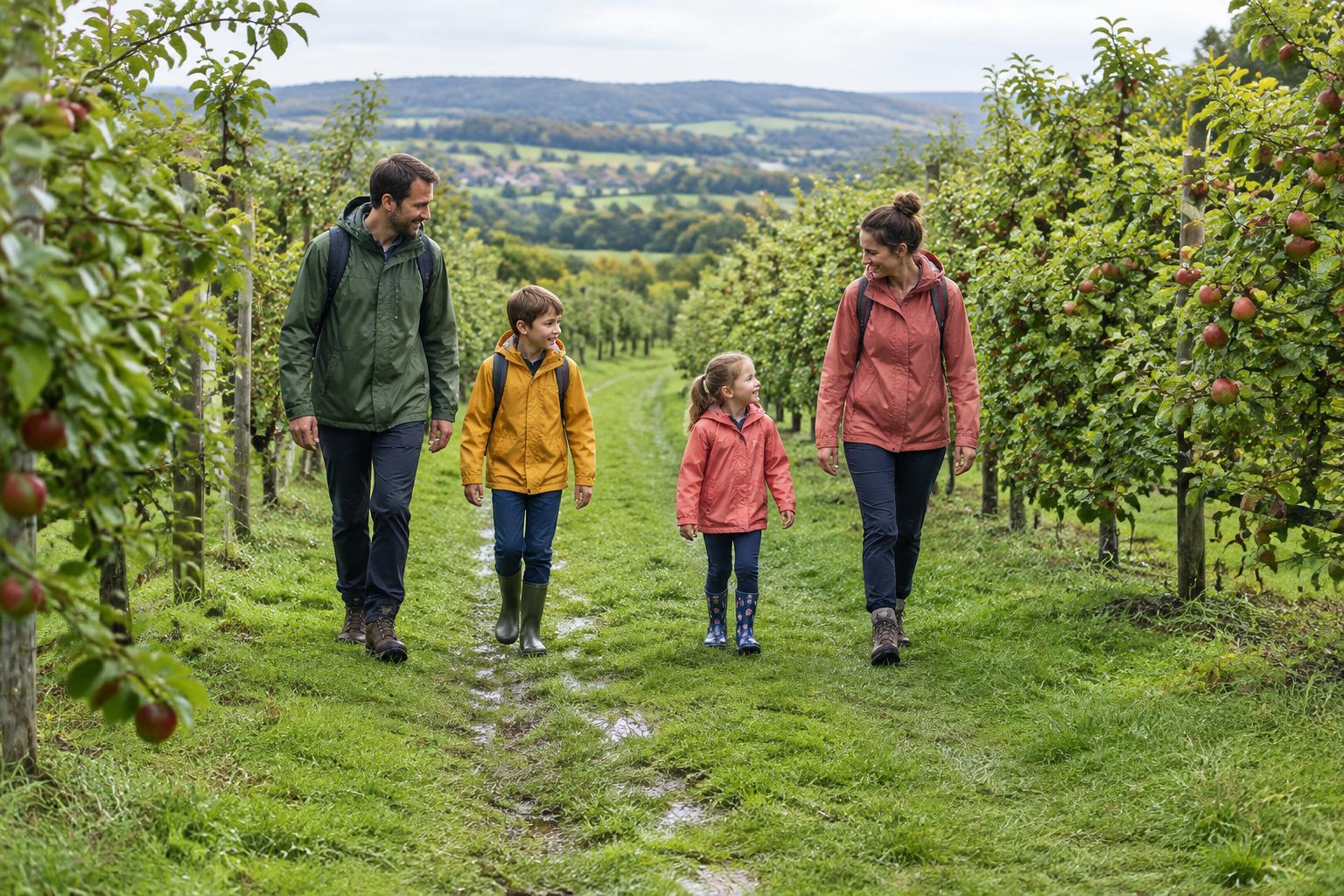
For an orchard visit, think sturdy shoes, trousers you can bend in and layers that are easy to adjust. Grass between the rows can be damp even on a sunny morning, and paths may be uneven. A light waterproof jacket in the bag is often more useful than a very heavy coat worn throughout the day.
Follow the orchard’s picking instructions and keep children off ladders unless the operator explicitly provides a supervised activity. Let the host explain which fruit is available and whether tasting is allowed. Wearing the right clothes does not mean an orchard is open or that fruit is ready; check current opening information, booking and picking conditions before travelling.
What to wear for berry picking and sunny fields
Berry picking often means bending or crouching with little shade. Choose loose, comfortable clothing, secure shoes and a hat that shades the face, ears and neck. Lightweight long sleeves can offer coverage without a heavy warm layer. Bring drinking water and plan shade breaks rather than expecting children to keep picking through the hottest part of the day.
The NHS recommends sunscreen with at least SPF 30 and at least four-star UVA protection. Apply it to exposed skin and follow the product’s reapplication instructions, including after sweating or water exposure. Clothing and shade matter too; sunscreen is not a way to stay in strong sun for longer. Local UV levels and peak sun hours vary around the world, so check local advice rather than assuming the temperature tells the whole story.
What to wear for pumpkin patches and wet farm days
Pumpkin fields can be muddy, with stems, vines and uneven ground underfoot. Wellies or suitable walking boots, long trousers and waterproof outerwear are a sensible starting point. For a toddler who loves puddles, waterproof overtrousers or a rain suit can make the return journey more comfortable.
Pack dry trousers, socks and shoes for the journey home. Bring a bag for muddy clothes and protect the car seat without changing how its safety harness is fitted. Do not let children climb unstable stacks, ride in picking trolleys unless permitted, or play close to moving farm vehicles.
What to wear for guided foraging walks
Ask the guide about distance, terrain, shelter and the age suitability of the walk. For woodland or hedgerow routes, choose grippy footwear, long trousers and long sleeves, with a waterproof layer in the bag. A small backpack keeps hands free; avoid carrying a heavy basket while also trying to steady a child.
Let the guide decide what can be collected and how. A plant-identification app or a familiar-looking berry is not sufficient proof that something is safe to eat. Teach children to ask before touching or tasting, and leave knives or cutting tools to the responsible adult or guide. Gloves, washing and cooking cannot turn a poisonous plant or mushroom into safe food.
Coastal foraging needs more than a pair of wellies
For a shore-based experience, ask the organiser exactly what footwear and protective equipment they require. Wet rocks can be slippery, and ordinary wellies are not automatically the best option. Wear layers suited to wind and spray, and keep spare warm clothes dry. Take a phone protected from water.
Check tides, weather and the route with a knowledgeable guide. Do not take children wading into channels or onto exposed rocks just because they have waterproof boots. Stay out of areas where you could be cut off, and do not assume shellfish are safe to gather or eat without local guidance on permissions and water quality. Clothing cannot make an unsafe tide or sea condition safe.
Babies, toddlers and children who feel the cold
Pack more spare clothing than you think you will need for a toddler: wet sleeves, spilled drinks and muddy knees can happen on the same visit. A spare top, trousers, underwear or nappies, socks and a warm layer cover most everyday mishaps. Keep the dry set in a separate bag.
Babies and children sitting in a pushchair or carrier are not moving as much as the adults walking, so check their comfort regularly. Make sure hoods and hats do not cover the face or restrict visibility, and adjust layers if they seem too hot or cold. Follow the carrier manufacturer’s guidance and keep airways clear. The NHS advises keeping babies under six months out of direct sunlight.
If your child dislikes seams, stiff jackets or unfamiliar footwear, try the outfit at home first. Familiar soft layers, a hat they tolerate and a shorter route may be better than expensive new kit. For children with mobility needs, ask the host about accessible surfaces, seating and shelter, and choose clothing that works comfortably with their usual equipment.
Hands, hats and the small details that matter
Keep shoelaces tied, tuck away long scarves and avoid trailing cords or dangling accessories near animals, gates or equipment. Tie back long hair when the host asks. In cold conditions, gloves and a warm hat are useful, but remove gloves before washing hands and eating.
For warm days, choose a sunhat that stays on without constant adjustment and suitable sunglasses where tolerated. Use child-appropriate insect repellent as directed, respecting age restrictions; products are not interchangeable. If your child has allergies or a medical condition, take their prescribed supplies and tell the organiser about any relevant needs in advance.
Farm hygiene: clothes and gloves are not a substitute for washing
At farms with animals, supervise children closely and wash hands thoroughly with soap and running water after touching animals, fences or other animal-area surfaces, and before eating. UKHSA states that alcohol hand gel and wipes are not a substitute for proper handwashing on farm visits. Check that washing facilities are available and use the designated eating areas.
Keep fingers, toys and dummies out of mouths while in animal areas, and do not eat there. Gloves can become contaminated too. Follow the farm’s instructions for cleaning footwear and pushchair wheels before leaving, then remove muddy shoes before getting comfortable at home. Keep food separate from dirty kit.
A family packing checklist
Wear: secure closed-toe footwear; comfortable socks; flexible trousers; a breathable top; and layers suited to the forecast, the ground and the activity.
Carry: a waterproof jacket for each person when rain is possible; spare socks; a full change for younger children; a sunhat and appropriate sunscreen; drinking water; snacks for designated eating areas; essential medicines; and a small first-aid kit.
Add when relevant: waterproof overtrousers; warm hats and gloves; suitable insect repellent; a charged phone; your booking details; a bag for wet clothes; and spare footwear for the journey home. Ask whether baskets, containers, gloves or other activity equipment are provided before bringing your own.
Keep it affordable and comfortable
Start with what the family already owns. For an occasional farm visit, comfortable sturdy shoes, flexible trousers, an ordinary warm layer and a serviceable raincoat may be all you need. Borrow specialist items or look for second-hand kit when an activity genuinely requires it. Fit, grip and comfort matter more than the brand.
Let children help choose between two suitable outfits and try the shoes before you leave. Dress for a little dirt rather than asking them to protect their best clothes. The aim is a relaxed day in which everyone can move, explore and enjoy the place, not a perfectly coordinated photograph.
Before you leave, check these five things
Check the forecast and any local weather warnings; confirm the farm or guide’s footwear advice; find out about toilets and handwashing; check route length and accessibility; and confirm today’s opening, booking and picking availability through the official host.
Build in an easy way to finish early. A cold, uncomfortable or exhausted child does not need to complete the itinerary. A shorter walk with dry socks and a warm drink afterwards can still be a wonderful family day.
After the day: dry clothes, clean boots and a tick check
Change out of wet clothing, separate muddy gear from food and clean footwear as the host advises. Check everyone’s skin for ticks after time in long grass or woodland, including behind the knees, around the waist and on the head and neck. If you find an attached tick, follow NHS advice to remove it promptly with fine-tipped tweezers or a tick-removal tool; do not squeeze the body or try to burn it off.
Seek medical advice if an expanding rash or flu-like symptoms develop after a tick bite, and mention the outdoor visit. If a child becomes unwell after a farm visit, tell the healthcare professional about contact with animals. This guide is general preparation advice, not a substitute for individual medical advice or the organiser’s safety instructions.
Questions before you go
Can children wear trainers to a farm?
Sometimes, on dry maintained paths if the farm says they are suitable. Choose secure closed-toe trainers with grip. For muddy fields, wet grass or uneven routes, wellies or walking boots are usually more practical. Check the host’s advice first.
Are wellies better than walking boots for foraging?
Wellies work well for short muddy outings. Walking boots or sturdy walking shoes are often more comfortable on longer, uneven walks. The route and conditions matter more than the label; ask your guide.
Should children wear shorts for berry picking?
On a hot day at a maintained picking field, the host may consider shorts suitable. Long lightweight trousers give more coverage against sun, scratches and ticks, particularly near long grass or hedgerows. Combine clothing with shade and suitable sunscreen.
What should I pack for a toddler on a farm day?
Bring a complete spare outfit, extra socks, waterproof outerwear when needed, drinks, snacks for designated eating areas and any nappies or essential medicines. A separate bag for wet clothing and dry shoes for the car can make the trip home easier.
Do we need expensive outdoor clothing?
No. For many short visits, comfortable clothes you already own are enough. Prioritise secure footwear, layers and a suitable raincoat. Ask the operator about any specialist equipment before buying it.
Does hand sanitiser replace handwashing after touching farm animals?
No. UKHSA advises washing with soap and running water after animal-area contact and before eating. Hand gels and wipes are not a substitute on farm visits. Supervise children and use the farm’s washing facilities.
Can children eat berries they find on a foraging walk?
Not without explicit approval from a knowledgeable guide or responsible adult who has positively identified them as safe and suitable. Teach children to ask before touching or tasting. Do not rely on an app, gloves, washing or cooking to make an unknown plant safe.
Find places to visit
Season months are approximate, not live opening updates. Check the farm’s official information for today’s hours, picking availability, prices and booking.