- Duration
- 1 to 1.5 hrs at the site
- Season
- Year-round, subject to volcanic status
- Group
- Any
- Price band
- €
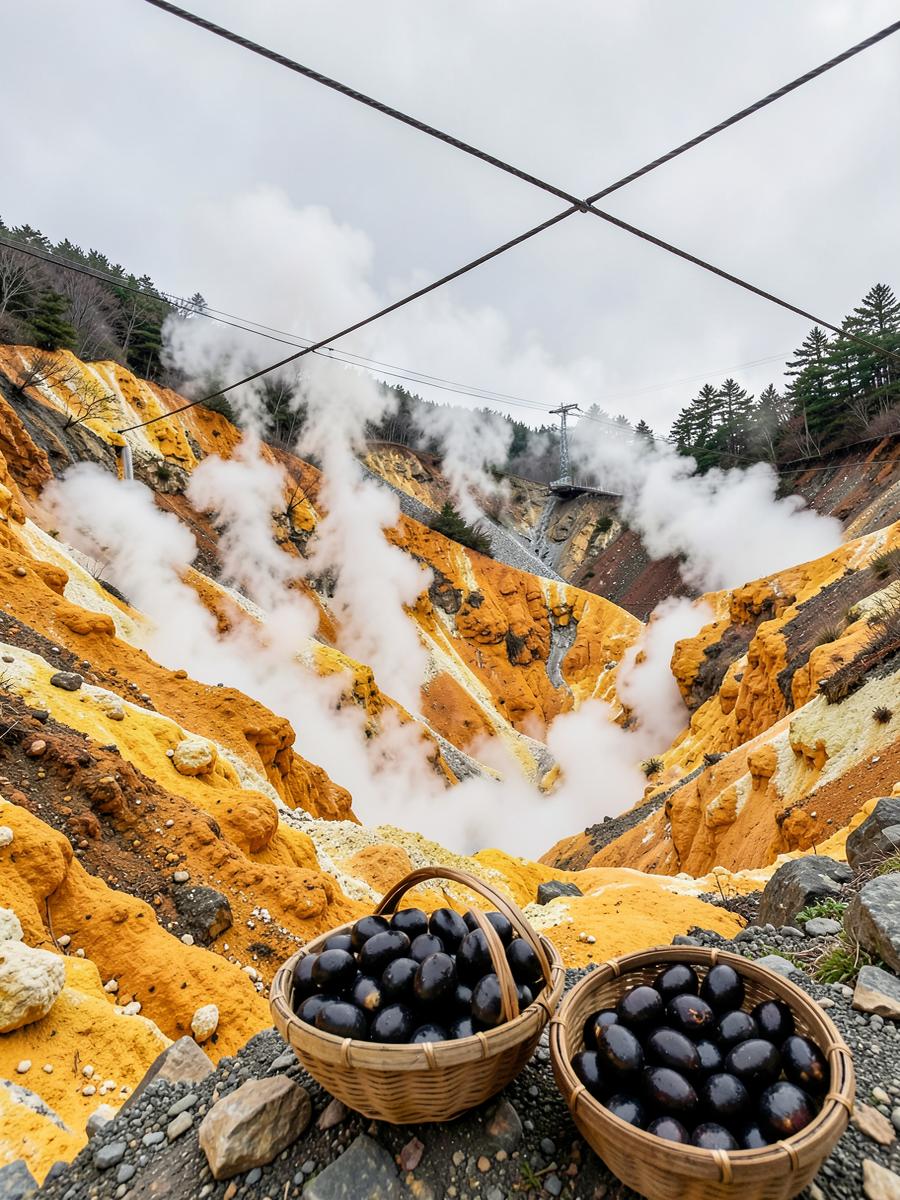
Owakudani means great boiling valley, and it is exactly that: a scarred ochre bowl on the side of Mount Hakone, hissing steam three thousand years after the last eruption. Ordinary chicken eggs are cooked in the sulfur springs. The hydrogen sulfide reacts with iron in the shell and turns it jet black; the egg inside is a perfectly normal hard-boiled egg, which is somehow the best part. Local lore says one adds seven years to your life. People eat two.
What you'll do
- Ride the Hakone Ropeway up over the vents. On clear days, Fuji sits behind you
- Buy kuro-tamago fresh from the counter at Kurotamago-kan, ¥500 for five, cash
- Eat one standing in the steam, which is the entire point
- Walk the geothermal viewing area, and the nature trail if it's open
Pair it with
A Hakone onsen and the Ome brewery in the western hills. The same water, two hundred degrees apart.
Practical
Odakyu Romancecar Shinjuku to Hakone-Yumoto, about 85 minutes, then Tozan railway, cable car and ropeway. The Hakone Free Pass covers nearly all of it. Eggs sell out; the shop counter runs roughly 9:00 to 16:20 with seasonal variation. The nature trail requires advance reservation and a cooperation fee.
Before you book
- Owakudani closes when volcanic gas levels rise or the ropeway suspends. The 2015 eruption closed it for months and shorter closures recur. Check the Hakone Ropeway official status feed before travelling, and never book a fixed date without it.
When it runs
Solid ochre marks peak months. Pale ochre marks months it runs in a quieter form.