- Duration
- 2 to 4 hrs
- Season
- Best Sep to Apr; tide-dependent year-round
- Group
- 2 to 12
- Price band
- €€
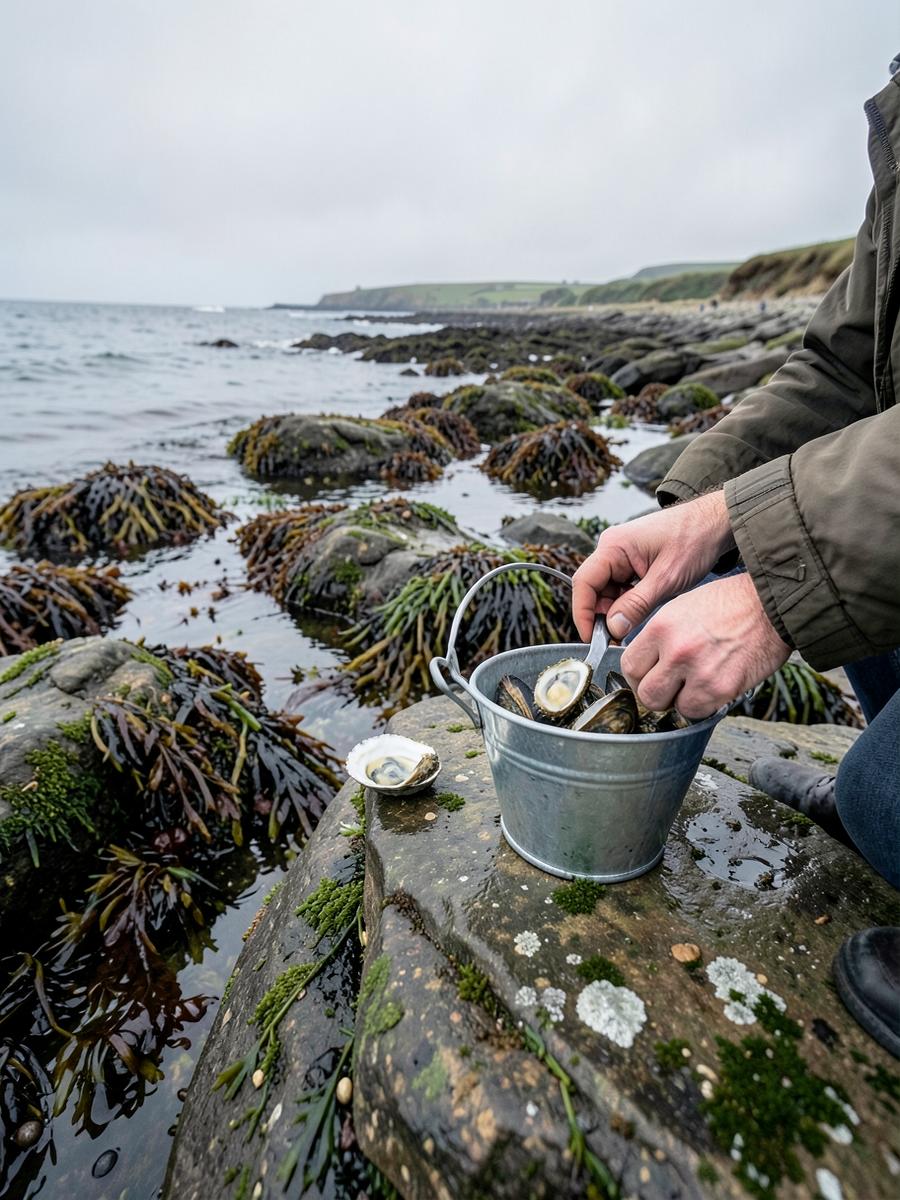
Irish coastal water is cold, so shellfish grow slowly, which means denser, sweeter meat and thicker shells. Foraging here is a real skill and it is mostly reading: which rock, which tide, which species, what's safe. Guided walks in West Cork and Kerry go out on a falling tide with a marine biologist and cover seaweeds, shellfish and shore plants together, along with the folklore attached to them. This coast has been harvested continuously for a very long time and the stories are part of the knowledge, not decoration.
What you'll do
- Go out on a falling tide and learn to read the shore: zones, species, what to leave
- Identify edible seaweeds and shellfish, and the ones to walk past
- Visit a working oyster and mussel farm, such as the family operation at Castlemaine Harbour
- Eat it on the shore, or with a pint, which is the correct pairing and not a cliché
Pair it with
San Sebastián, for the Atlantic seafood chapter, or Porto.
Practical
West Cork (Kinsale and west), Kerry, Galway Bay and Connemara. Tide tables set the schedule, so times shift daily. Boots and a waterproof, always.
Before you book
- Safety and legality, non-negotiable: wild shellfish carry biotoxin and water-quality risk, and gathering is regulated. Every walk here goes out with a licensed, insured guide who checks current classification for that shore on that day. We do not publish self-guided foraging content.
When it runs
Solid ochre marks peak months. Pale ochre marks months it runs in a quieter form.